It can't be cured, but it can be handled with treatment. Other examples of persistent diseases consist of asthma, diabetes, and heart problem. It is vital that treatment concurrently addresses any co-occurring neurological or psychological disorders that are understood to drive vulnerable individuals to experiment with drugs and become addicted in the first location.
3 Studies published in top-tier publications like The New England Journal of Medicine support the position that dependency is a brain illness. 4 A disease is a condition that alters the method an organ functions. Addiction does this to the brain, altering the brain on a physiological level. It literally alters the method the brain works, rewiring its fundamental structure.
Although there is no remedy for dependency, there are numerous evidence-based treatments that are effective at managing the health problem. Like all chronic diseases, dependency requires ongoing here management that may consist of medication, treatment, and way of life change. As soon as in healing from substance usage condition, an individual can go on to live a healthy and successful life.
The human brain is wired to reward us when we do something satisfying. who has a drug addiction problem. Working out, consuming, and other satisfying behaviors straight linked to our health and survival set off the release of a neurotransmitter called dopamine. This not only makes us feel great, however it motivates us to keep doing what we're doing.
The Buzz on How To Cure Drug Addiction Naturally
5 Drugs activate that very same part of the brainthe reward system. However they do it to an extreme level, rewiring the brain in hazardous ways. When somebody takes a drug, their brain launches severe quantities of dopamineway more than gets launched as an outcome of a natural pleasurable habits. The brain overreacts, decreasing dopamine production in an attempt to normalize these sudden, sky-high levels the drugs have actually developed.
How the Brain Responds to Natural Benefits & Drugs (NIDA) Research studies have revealed that constant substance abuse badly restricts a person's capability to feel enjoyment. at all. 6 Over time, drug use results in much smaller releases of dopamine. That indicates the brain's reward center is less receptive to satisfaction and pleasure, both from drugs, along with from every day sources, like relationships or activities that a person as soon as delighted in. what are some ways that healthcare professionals can decrease the risk of drug abuse and addiction?.
7 Withdrawal occurs when an individual who's addicted to a substance stops taking it completely: either in an attempt to give up cold turkey, or due to the fact that they do not have access to the drug. Somebody in withdrawal feels definitely awful: depressed, despondent, and physically ill. Brain imaging studies from drug-addicted people reveal physical, quantifiable modifications in locations of the brain that are vital to judgment, decision making, learning and memory, and habits control.
8 An appealing trainee might see his grades slip. A bubbly social butterfly may suddenly have problem getting out Visit this website of bed. A trustworthy sibling may begin taking or lying. Behavioral changes are directly linked to the drug user's altering brain. Cravings take over. These cravings hurt, constant, and sidetracking.
All about People At The Highest Risk Of Drug Addiction Are Those Who Are
Specifically given the strength of withdrawal symptoms, the body wants to avoid remaining in withdrawal at all costs. "We require to inform our kids that a person drink or one tablet can lead to an addiction. A few of us have the genes that increase our danger of dependency, even after simply a couple of uses.
But at some point during use, a switch gets turned within the brain and the decision to utilize is no longer voluntary. As the Director of the National Institute on Substance abuse puts it, it's as if an addicted person's brains has actually been pirated. Anyone who tries a substance can become addicted, and research reveals that the majority https://canvas.instructure.com/eportfolios/121860/remingtondndj842/Our_Places_Where_Addiction_Gamblers_Who_Have_Received_Treatment_Can_Receive_Help_Diaries of Americans are at danger of establishing dependency.
What's more, 42% of 1718 year olds report that they've tried illicit drugs. 10 After initial direct exposure, nobody chooses how their brain will respond to drugs or alcohol. So why do some people develop dependency, while others don't? The latest science points to three primary elements. Scientific research study has actually revealed that 5075% of the likelihood that a person will develop dependency comes from genes, or a household history of the disease.
Research study shows that maturing in an environment with older grownups who use drugs or engage in criminal habits is a danger element for addiction. Protective factors like a stable home environment and supportive school are all proven to lower the risk. Dependency can develop at any age. However research study reveals that the previously in life a person attempts drugs, the most likely that person is to develop dependency.
The 6-Minute Rule for Which Of The Following Is Not A Possible Sign Of A Drug Addiction?
Presenting drugs to the brain during this time of development and modification can trigger severe, long-lasting damage. Addiction is not a choice. It's not an ethical failing, or a character flaw, or something that "bad people" do. The majority of scientists and professionals concur that it's a disease that is triggered by biology, environment, and other elements.
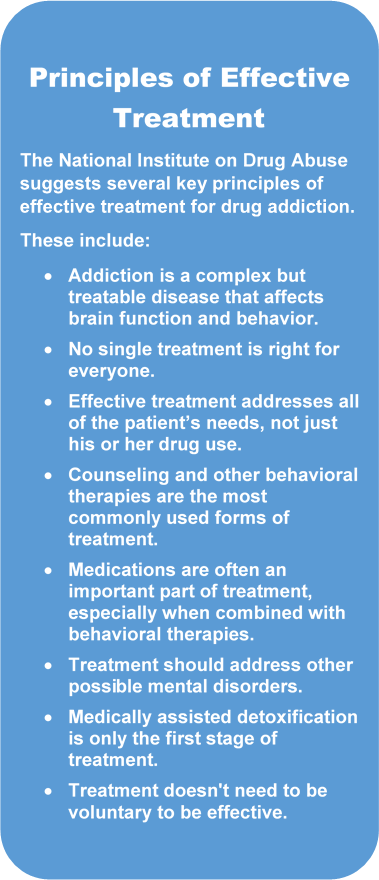
A person can't reverse the damage drugs have done to their brain through sheer determination. Like other persistent illnesses, such as asthma or type 2 diabetes, continuous management of addiction is required for long-lasting healing. This can consist of medication, behavior modification, peer-support, and way of life modifications.
This feature post on neuroscientist Marc Lewis and his brand-new book discusses his theory that callenges the modern-day concensus on substance abuse as a brain illness, arguing that in "in reality it is an intricate cultural, social, mental and biological phenomenon" as NDARC Professor Alison Ritter describes. For a long time, Marc Lewis felt a body blow of shame whenever he bore in mind that night.
Lewis was slumped half-naked in a tub. "We were just talking about what to do with the body." Lewis was at just the beginning of his odyssey into opiates. After this overdose, he dropped out of university and didn't get his research studies for another 9 years. At the next effort, he was excelling at scientific psychology when he made the front page of the regional paper.
Rumored Buzz on How Are Addiction Tolerance And Withdrawal Related To Drug Abuse
That was careless; he 'd been effectively pulling off 3 or 4 break-ins a week. That was 34 years back. Now 64, Professor Marc Lewis is a developmental neuroscientist, based at the Radboud University in Nijmegen in the Netherlands. He details his early exploits in 2011's Memoirs of an Addicted Brain, with the sort of thrilling detail that should provide you some sort of biochemical response.
The prevalent theory in the United States, and to some degree in Australia, is that addiction is a persistent brain illness a progressive, incurable condition that can be kept at bay only by fearful abstinence (why is drug addiction a disease). There are variations of this disease model, among which ended up being the basis of 12-step healing and the example of the large majority of rehab programs.
It can properly be unlearned by forging more powerful synaptic paths by means of much better practices. The implication for the $35 billion-dollar treatment industry in the US is that dealing with addiction as a medical issue must be only a little component of a more holistic technique. The problem is, there's a lot of beneficial interest and financial investment in perpetuating the illness model.